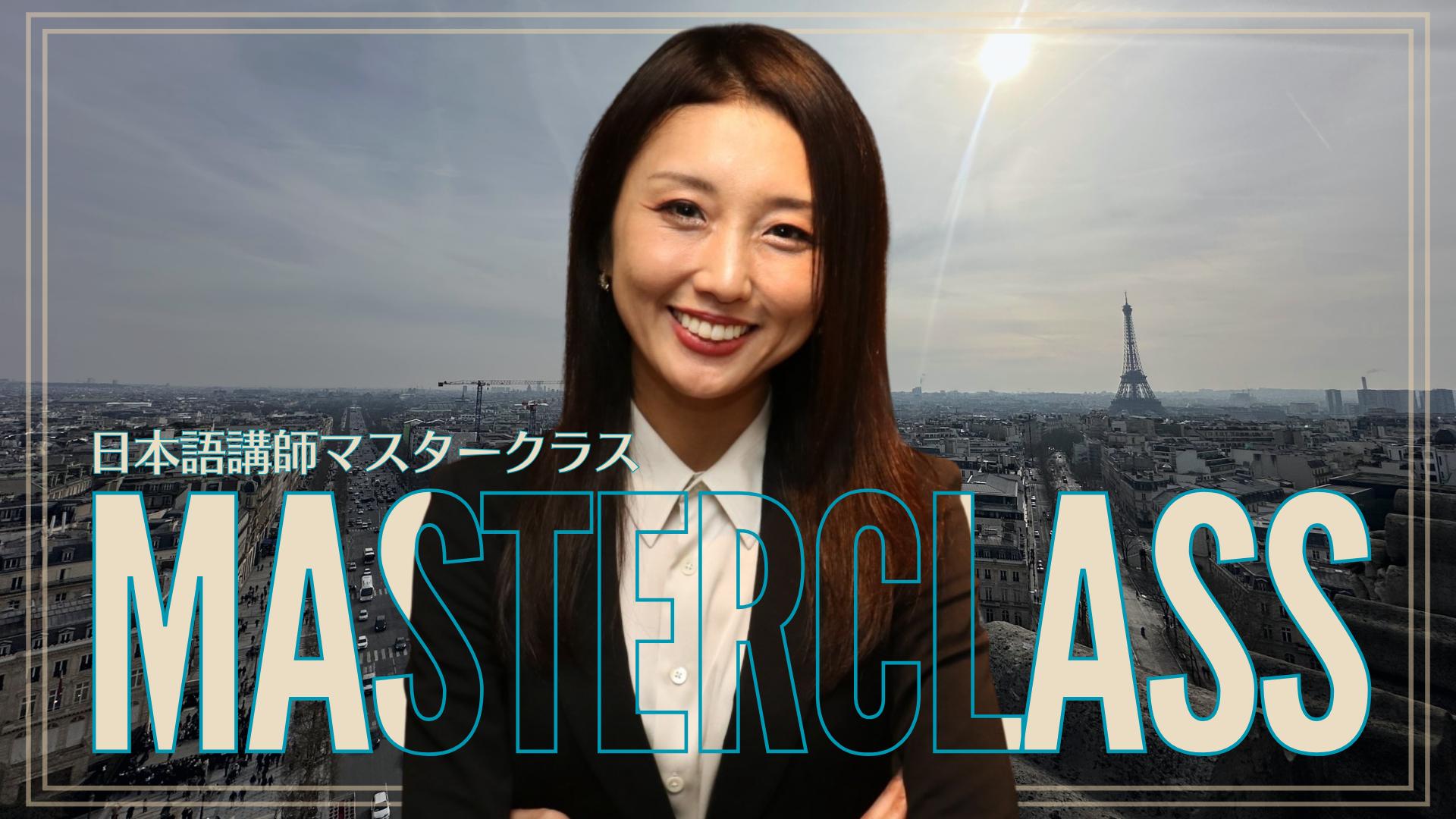
Mariko Suzuki was born in Japan, but her first memory is of a beach in California: running toward the ocean in Redondo Beach while her mother called out for her to be careful. Her father’s job moved the family back and forth for years, from California to Tokyo to a town near Vancouver, Canada. She later graduated from a university in rural Idaho, and in all she has lived abroad for 13 years.
Today she is in her fourth year teaching Japanese online, and she runs Nihongo Koshi Master Class, a community that trains online Japanese teachers. She also works in overseas business consulting and serves in Japan’s reserve forces. She sat down with Pensight CEO Yuki to talk about how she built a teaching business from nothing, what it took to earn ¥1 million a month, and the one trait she sees in every teacher who lasts.
Learning languages to survive
People assume a childhood spent moving between countries makes you naturally bilingual. It didn’t, Mariko says. Back in Japan, people told her her Japanese was poor. In the US and Canada, her English wasn’t good enough. “I always felt behind in both,” she says. “I didn’t pay attention to language because I loved it. I had to figure it out to survive.”
For years, that turned into pressure. She felt she had to be perfect, to keep up with native speakers and never fall short. What finally changed that was teaching. Her students came to Japanese from zero, simply because they loved Japan. Watching them, she learned that language is a tool, that the person matters more, and that real communication means trying again and adjusting as many times as it takes. “I think my students healed me more than anyone,” she says.
A conversation at the laundromat
Mariko’s start was not a polished success story, and she tells it plainly. In spring 2023, after a series of setbacks and big life changes, she was starting over with almost nothing. She didn’t own a washing machine and used a cardboard box as a table.
At a coin laundromat, she met Daniel, a traveler from Australia whose Japanese was excellent. He told her he had learned with an app and online lessons. Mariko said she had once wanted to teach Japanese, but gave up because the certification would take a year and cost about ¥700,000. Daniel told her that anyone could start teaching online for free. Some students want a certified teacher, he said, but others don’t mind, so why not try?
“It was like everything opened up in front of me,” she says. She knew herself well enough to act fast. “If I let myself feel lazy for even a second, I’d never sign up.” She went home and registered on a tutoring site that night.
For a month, nothing happened. Then a father booked lessons for his eight-year-old daughter before Mariko had even seen his message. That student is still with her, three and a half years later. More bookings followed, and she learned as she went, with no textbook and no materials of her own.

One mission: never make students hate Japanese
More than 80% of Mariko’s students have stayed with her for two and a half to three years or more. She traces that to one mission: never make a student hate Japanese.
Her reason comes from Japan’s own classrooms. Many Japanese people studied English for years and came out disliking it, or unable to speak it. She worries that teaching Japanese the way English was taught to her generation would do the same thing to her students. She kept trying to improve her own English because she never came to hate it, and she wants her students to feel the same about Japanese.
In practice, it starts with praise, and specifically praise for attitude. Many Japanese teachers are hard on themselves, she says, and they hold students to the same high bar. “Of course you can do that. Next.” Mariko does the opposite. She notices the effort and struggle a student hasn’t shown anyone, puts it into words, and tells them she sees it. “People want to spend time with someone who shines a light on the effort no one else noticed.”
The hard part: keeping it a business
Mariko is just as clear about the business side. Looking at the students who left, she sees a pattern: she had sometimes tried to keep them for reasons other than language, letting the relationship drift into something closer to friendship. Now she keeps a clear red line. She isn’t distant, but she knows what is and isn’t OK as a paid professional, and she finds the lessons last longer when that line is clear.
She also never pretends language is quick. She studied French for about seven years in Canada and still can’t speak it. “The time you put in doesn’t always pay off in proportion,” she says. So she doesn’t hold back from suggesting more lessons, sets clear goals, and is honest about what reaching them will take. Her lessons are priced at $40 to $45 when students book with her directly, which she sees as a real commitment. The students who stay are the ones who understand that learning a language can’t be rushed.
My mission is simple: never make a student hate Japanese.
What ¥1 million a month really took
Three months after she started, Mariko was taking home ¥450,000 a month. After a year, it was ¥700,000. In her second year, it reached ¥1 million, and she held that for eight months in a row, from late 2025 into early 2026.
She is honest about the cost. That year she took three days off: New Year’s, New Year’s Eve, and a Christmas when no one happened to book. She taught 170 to 180 lessons a month at about $40 each. Booking students directly kept fees low, in exchange for more admin and the occasional awkward conversation about unpaid lessons. “Online teaching is income for your time,” she says. “If every slot is full, slots times your rate is your ceiling. To go higher, you raise your rate or open more hours.”
So why do it? She wanted to prove that online Japanese teaching could be a real living. The market rate for teaching Japanese is often around ¥2,000 an hour, and much of the work is volunteer, even though good teachers have to be all-rounders. ¥1 million a month, sustained, was the clearest proof she could think of.
Why she started training teachers
Mariko’s own setbacks taught her what financial independence protects. Especially for women, she says, life changes often happen to you: health, pregnancy, marriage, caring for family, a spouse’s transfer. Having your own income means more choices and fewer things you have to give up. “Money may not be the most important thing in life,” she says. “But protecting what matters to you almost always involves it.”
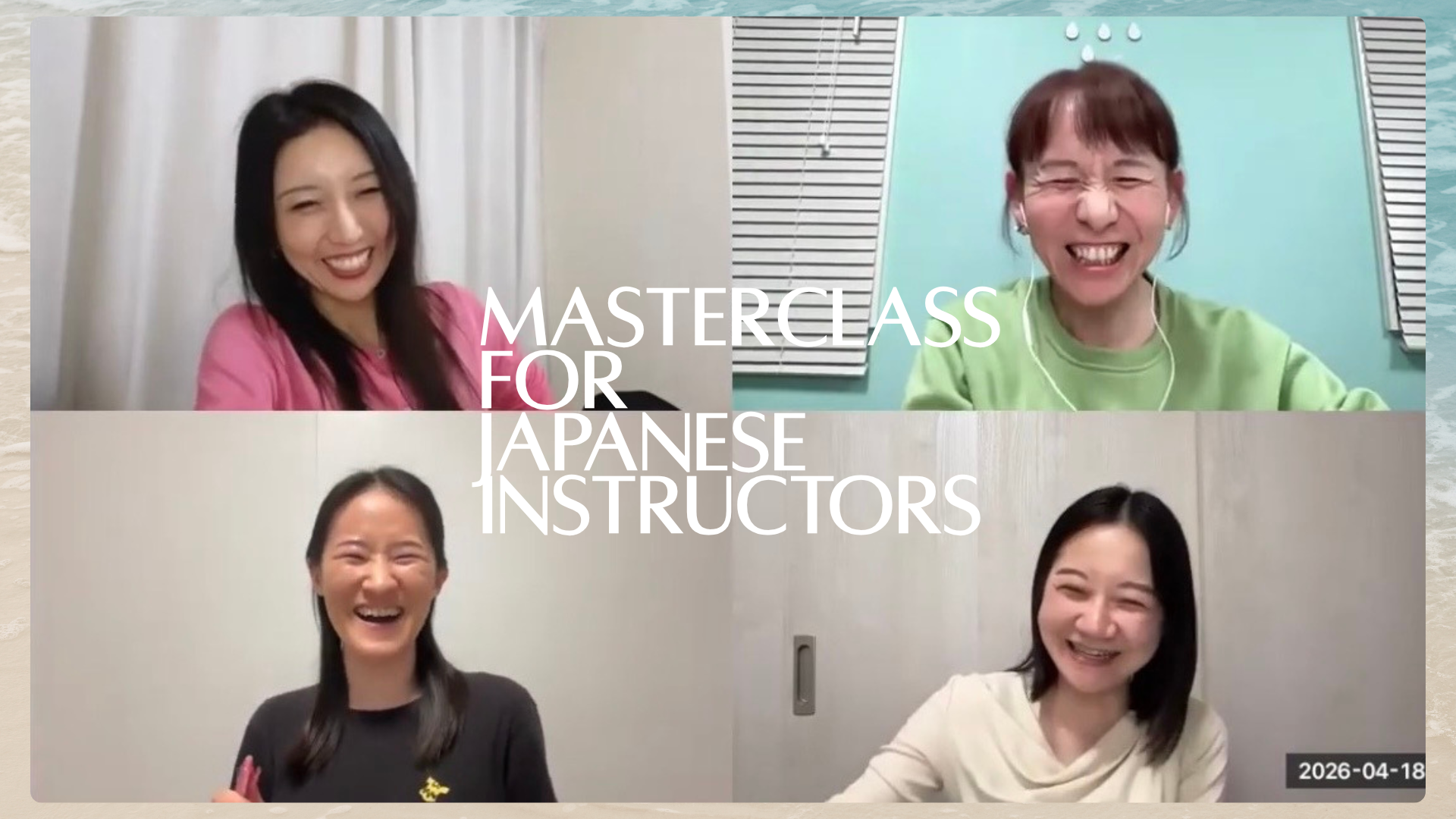
As her income grew, she noticed there was a method behind what she had changed. She built Nihongo Koshi Master Class to share it. It has two options: a membership community and one-on-one consulting. Both are lifetime memberships with no monthly fee, because she hates paying for subscriptions she forgot about. “Once you’re one of us, you’re one of us,” she says.
The program is built on three pillars: Mission, Charm and Targeting, in that order. Charm is the one she added on purpose. Earlier in her career, she says, she succeeded by fitting into frameworks where anyone could have done the job, and it made her unhappy. Charm is what only you have. Recently she realized the third pillar needs a rethink, too. In the age of AI, strategy is easy to get for free. What teachers actually get stuck on is tactics: the specific next action.
The teachers who last are on fire
Yuki asked what separates teachers who build a lasting business from those who don’t. Mariko’s answer was short: people who are truly living their lives all in. “The teachers who are on fire become the ones people choose,” she says.
Teachers who chase methods, tips and techniques often do it because they feel incomplete, she explains, and that doubt dims them. The teachers who last believe in their own lives, which is why they can believe in their students’ growth too. They pass on more than grammar.
AI needs a conductor
Mariko admits she isn’t an AI expert, but she sees it as a partner, not a competitor. AI can keep doing a task without getting tired or uneven, like having thousands of assistants who never need a day off. The people who succeed with it, she says, are conductors: they know clearly what they want to build and direct AI toward it. If you let AI lead, you can’t get anything better than your own level out of it.
Materials, slides and videos are things students can now make themselves. What they can’t get from AI is a native speaker’s instinct for how a phrase lands, or a teacher who makes them want to keep learning. “Teachers who know that value, and treat every lesson as a chance to light that passion, will be irreplaceable,” she says.
Why Mariko recommends Pensight
Mariko had only just joined Pensight when she sat down with Yuki, and she says she is still learning to use all of it. But she already sees value on two levels.
The first comes before any feature: access to people. In an age when AI can give anyone the “correct” answer for free, she believes what has real value is raw knowledge, the kind that comes from lived experience. “Through Pensight, I can talk with people like Yuki, who have built real results, and learn from their patterns and data,” she says. “Most people don’t notice that, but it’s a big part of the value.”
The second is the service itself. Teachers often run on intuition: a sense that this student needs this, or a reminder to try that later. But intuition is uneven, she says. It can come from real inspiration, from an old failure, or simply from how well you slept. Pensight’s AI processes and stores what happens in her real lessons and analyzes it, so the insights come from her own teaching, not general advice. And it brings together work she used to do by hopping between different systems and services. “For someone like me who hates extra hassle, that’s a huge help,” she laughs. “It saves time and cuts down on mistakes.”
Put together, she sees two axes: steady, accumulated data on one side, and the teacher conducting and choosing on the other. “Having both of those is a real weapon,” she says, “not just for language teachers, but for content creators and influencers too.” She has already introduced Pensight to her Master Class members.
Find Mariko
- Nihongo Koshi Master Class: masterclass-9.jimdosite.com
- Mariko's Instagram
Frequently asked questions
Who is Mariko Suzuki?
Mariko Suzuki is an online Japanese teacher in her fourth year of teaching and the founder of Nihongo Koshi Master Class, a community that trains online Japanese teachers. She grew up between Japan, California and Canada, lived abroad for 13 years, and also works in overseas business consulting.
Can you make a living teaching Japanese online?
Mariko’s experience says yes. She reached ¥450,000 a month within three months of starting, ¥700,000 within a year, and ¥1 million a month in her second year, which she held for eight months. She is also clear that it meant teaching 170 to 180 lessons a month with almost no days off.
How do online language teachers keep students for years?
More than 80% of Mariko’s students have stayed for two and a half to three years or more. She credits her mission of never making students hate Japanese, specific praise for each student’s attitude and effort, and a clear professional boundary that keeps lessons focused.
What is Nihongo Koshi Master Class?
Nihongo Koshi Master Class is Mariko Suzuki’s community for online Japanese teachers. It offers a membership community and one-on-one consulting, both as lifetime memberships with no monthly fee, built on her framework of Mission, Charm and Targeting.
What makes a language teacher successful long term?
According to Mariko, the teachers who last are the ones who are truly on fire about their own lives. Rather than chasing more tips and techniques, they believe in themselves and their students, and they surround themselves with people who push them.
How should language teachers work with AI?
Mariko sees AI as a partner that needs a conductor. Teachers who know clearly what they want to build can use it like a team of tireless assistants. Pensight pairs AI that keeps steady data on each lesson with tools teachers manage in one place, while the teacher stays in charge.
Watch the full conversation between Mariko and Yuki on the Pensight podcast.