
- Every tutor wants to give lessons only they could give. Most tutors also have a full timetable. Great lessons take hours to prepare, and there aren't enough hours.
- Nik Peachey has designed English teaching materials for over a decade. Even for him, one rich multimedia lesson can take a full working day or more to build.
- Under time pressure, online lessons slide into dull gap-fills and coursebooks held up to the camera. "The teacher isn't necessary for that."
- His shift: don't start with the language point. Start with what students want to say, then help them say it.
- Use well-built materials and use AI as a partner, not an intern. It doesn't know your students. You do.
You want your lessons to be the kind students talk about afterwards. Lessons with real conversation, built around something they care about, that no textbook could quite reproduce. Then you look at your timetable.
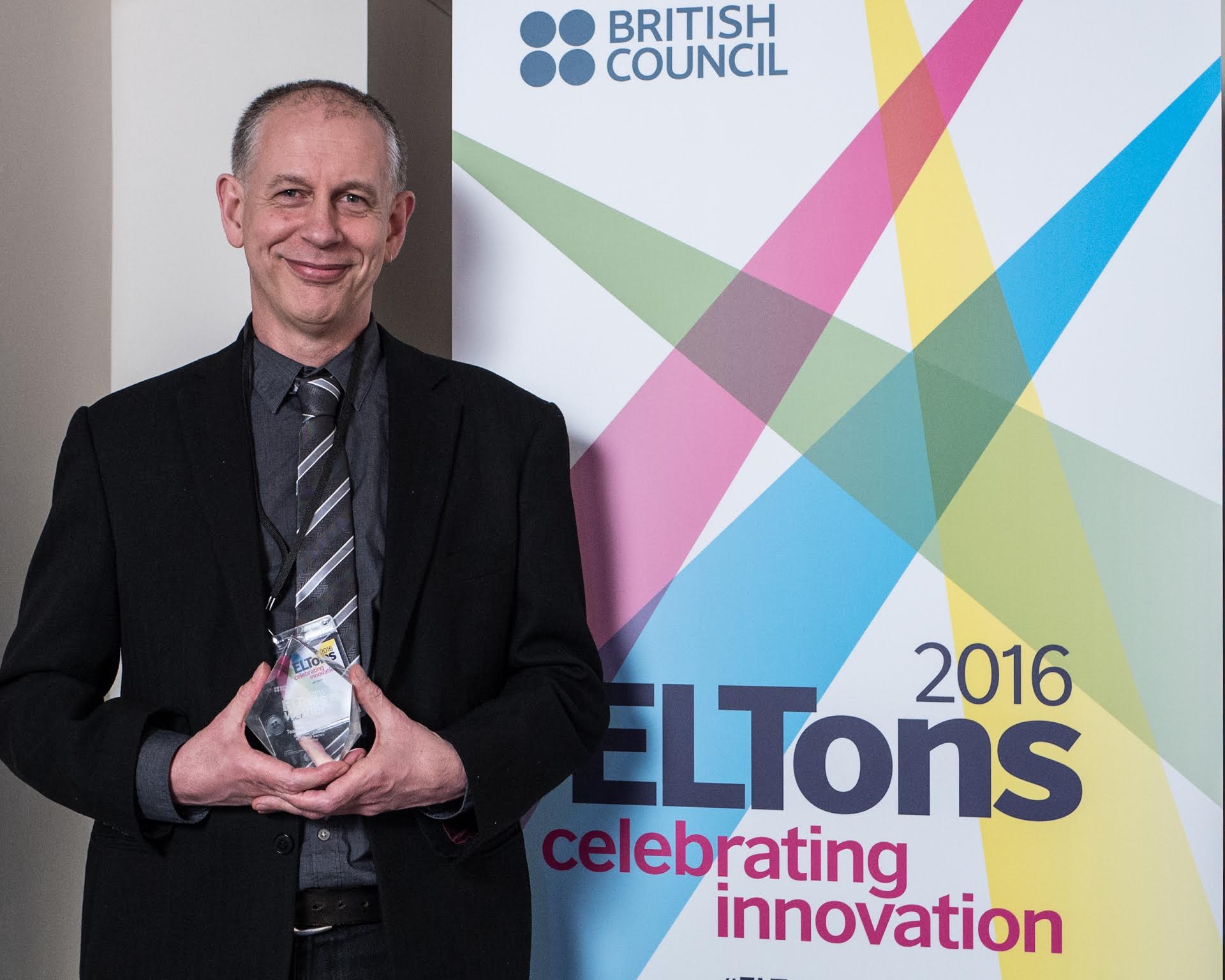
Pensight CEO Yuki spoke with Nik Peachey, who has worked in English language teaching since the 1990s and now spends most of his time designing teaching materials: courses and materials for publishers, NGOs and universities, plus his own lesson plans and resource books, which he has been developing for about 10 years. His work has won two British Council ELTon Awards: for Innovation in Teacher Resources (2016) and for Excellence in Course Innovation (2012). His answer to the time problem is not "work harder." It's to change where a lesson starts.
His lesson plans and teacher's library, with what's inside each one and who it's for.
The lesson you want to teach vs. the time you have
Nik knows exactly what a great lesson costs, because he builds them. A lesson plan with an interactive HTML5 presentation, with audio and video built in, takes him more than eight hours of work. And that's with years of design and technical skills behind him.
Most tutors don't have that kind of time for a single 60- or 90-minute lesson.
Yuki knows the other side of that equation. When he ran his own English coaching academy in Japan, he was teaching around a hundred sessions a month. Today he hears of independent tutors doing two hundred.
That's an insane amount of work. To have to create materials for all of those lessons is almost impossible.
Nik still encourages tutors to try building their own materials. "I always recommend to teachers, go away and have a go and try it." But he is honest about the limit: if you're busy teaching, you can't do that for every class.
What happens when there's no time
Nik saw the problem up close just before the pandemic. He was head of learning at an online school delivering lessons to students in Brazil, with 70 teachers spread around the world. Then, almost overnight, teachers everywhere were forced online with no materials. Coursebooks had always worked because every student had one on their desk. Online, you can't see what's on your students' desk.
The usual shortcuts
- Holding the coursebook up in front of the screen
- Repetitive gap-fill activities found online
- An AI lesson plan, and nothing else
Why they fall flat
- Coursebooks aren't built for this environment
- Students could do those alone on their computer
- "You've still got to develop the materials"
You don't really want to sit in this environment and just do a grammar gap-fill activity. Those are the kinds of things you can do alone on your computer. The teacher isn't necessary for that.
There is also the space itself. In a classroom you can walk over to a student, stand by the board, sit down. Online, Nik says, you are reduced to one small frame. "If you go over there, nobody can see you." Getting students talking in groups and breakout rooms needs materials designed with that in mind.
Start with what students want to say
Nik came to teaching by an unusual route. He started as a music teacher, teaching guitar in a prison, and got so interested in teaching that he became an English language teacher. He was, in his words, very bad at school, and it taught him a lot about what education shouldn't be: telling people lots of facts that they then have to memorize.
So when tutors ask what makes a lesson work, his first principle has nothing to do with grammar.
"You can't just say, OK, today we're going to do the third conditional, because nobody's going to be excited by that."
Students have to find a lesson interesting. Most of his lessons focus on people: how different people live, what students have in common with them, what's different. That creates an emotional engagement as well as an intellectual one, and it generates lots of interaction and discussion.
Like many in the profession, Nik was trained to think about the language point first. What he learned over years of teaching was the opposite:
It wasn't what you were giving the student, it's what they wanted to say and how you could help them say that.
AI: a partner, not an intern
Many tutors now use AI for lesson planning, and it can save time. Nik, who has developed a course and books on prompting, sees two catches. You need to be good at prompting. And you still need your own understanding of pedagogy to judge whether the plan is any good.
However good your AI is and however good your prompting is, the AI doesn't know your students, hasn't met your students, and it hasn't really any experience in the classroom.
Even with a good plan, the materials still have to be made. "In some ways it can seem like a big time saver, but in other ways, it still leaves you with a lot of work to do and new skills to learn."
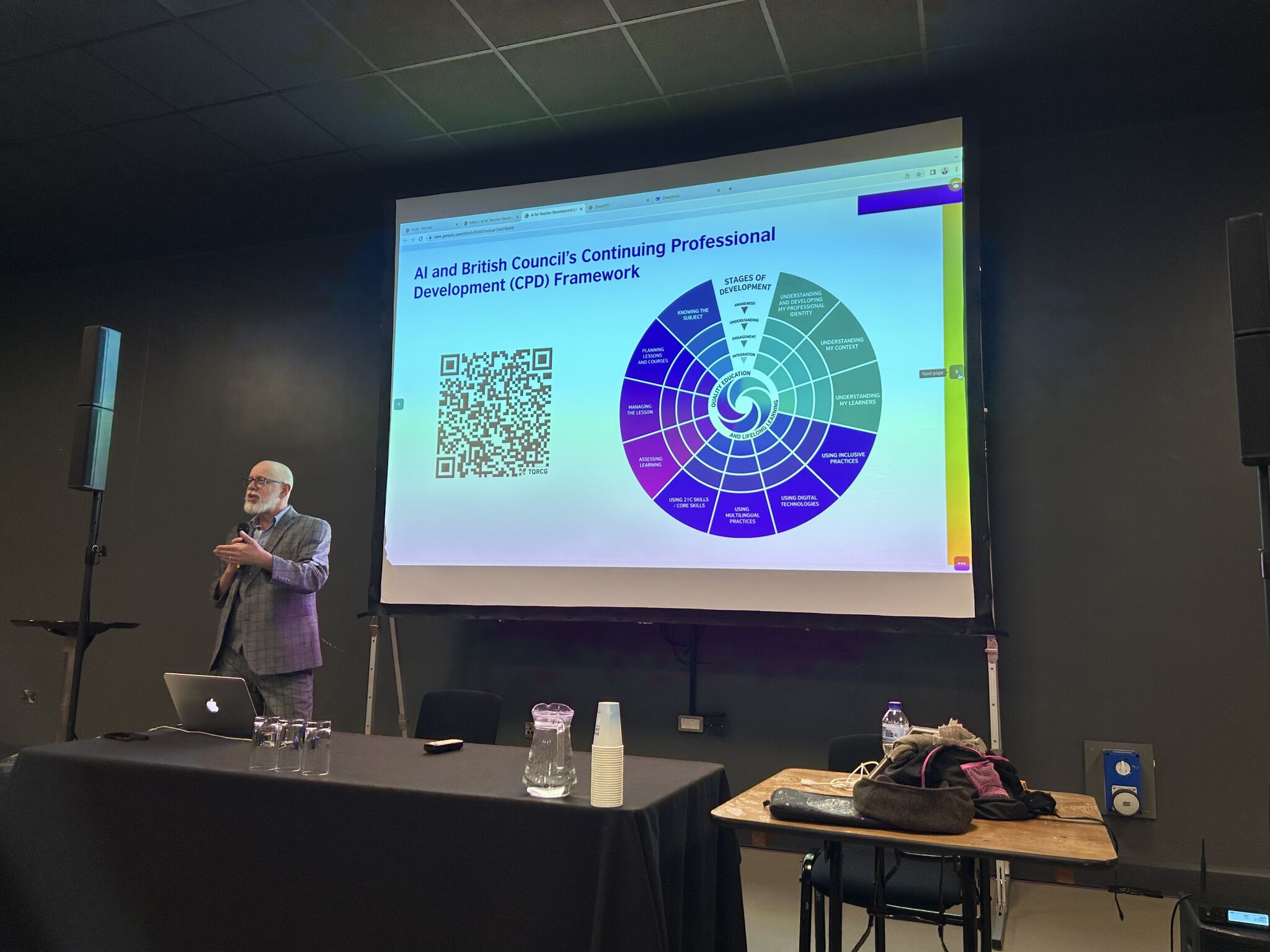
In his AI training with educators around the world, Nik sees a mix of paranoia, enthusiasm and curiosity. Many enthusiastic tutors haven't yet seen its full potential: immersive stories, role-play partners, developing critical thinking. His advice is in the way you work with it.
"Use it as a partner. Don't just use it as a kind of intern who does all your work for you while you go and scroll through Facebook or something."
Try it this week: less prep, more talk
You don't need to spend a whole day building one lesson to teach a great one. Based on how Nik designs his materials:
As Nik puts it, as a tutor you often know what the plan is in your head and you're good at planning. Getting the images, audio and video together is the part that's demanding or expensive.
What Nik offers on the Pensight Marketplace
Nik's lessons are built for exactly this way of teaching, online or in the classroom. Tutors will be able to buy lesson plans individually or in batches, or subscribe to his teacher's library, which includes all his books, lesson plans and videos, plus new ones as he adds them.
Teacher's guide
Step-by-step notes with screen grabs of each slide, extra tips and ideas.
Interactive presentations
Colourful HTML5 slides with audio and video embedded, easy to screen share.
A copy for students
Each lesson has a QR code, so students can scan it and get their own copy.
Media to build your own
Library members get videos, audio and images to build their own lessons around.
Educators who use them tell him their students engage immediately and notice when it's one of his lessons. Who it's not for is just as clear: "It's not for somebody who just wants to teach grammar." The lessons start by getting students interested and talking, and pull the language from there, which is why they work particularly well for speaking.
Before buying, tutors can start with his educational technology newsletter, free books and sample lesson plans. Afterwards there are self-paced courses on using AI, resource books on teaching and creativity, and video tips, with comments and forums where Nik replies.
Lesson plans and his teacher's library, with what's inside each one and who it's for.
- A great lesson can take hours to build. With a full timetable, you can't build every one yourself.
- Gap-fills and coursebooks on camera don't need you there. Your value is the interaction.
- Start with what students want to say, not with the language point.
- Topics about people's lives create emotional and intellectual engagement.
- AI doesn't know your students. Use it as a partner, not an intern.
- Keep your curiosity alive. It's what has kept Nik engaged for over 30 years.
Find Nik
- Pensight Marketplace: Nik's page
- Website: PeacheyPublications
- Lesson plans and resources: PeacheyPublications on Payhip
- Courses: AI and teaching courses
- Resource books: Teacher resource books
- Newsletter: Nik on Substack
- Social: Instagram · LinkedIn · Facebook · BlueSky
Frequently asked questions
How can tutors plan great lessons with little time?
Nik's approach: don't build everything yourself. Start from what students want to say, build around one image, audio or video, and use well-designed materials so your time goes into the interaction.
Why don't gap-fill activities work well in online lessons?
Students can do them alone on their computer. As Nik says, "the teacher isn't necessary for that." Online lessons work better when students interact and speak.
Should language tutors use AI for lesson planning?
It can save time, but you still need good prompting, your own pedagogical judgement and the materials themselves. Nik recommends using AI as a partner to exchange ideas with, not as an intern doing all the work.
What does Nik Peachey offer on Pensight?
Lesson plans you can buy individually or in batches, and a subscription teacher's library with all his books, lesson plans, videos and a media section.